Warm your home with half the wood and almost no smoke.
The Himalayan Rocket Stove is India's most trusted clean-burning wood stove — engineered in the Himalayas, refined across 15,000 real homes, and built to last decades.
Choose your model
Four sizes for every room — from a compact bedroom stove to a large-room powerhouse. All use the same clean combustion technology.
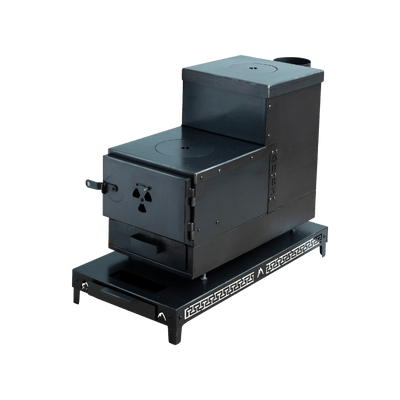
EcoMini
Smaller, lighter and cheaper than predecessors — but just as hot. The smallest, lightest, hottest stove on the market. Uses less than 50% of the wood of a typical Chulha/Bukhari.
₹23,125
View details→
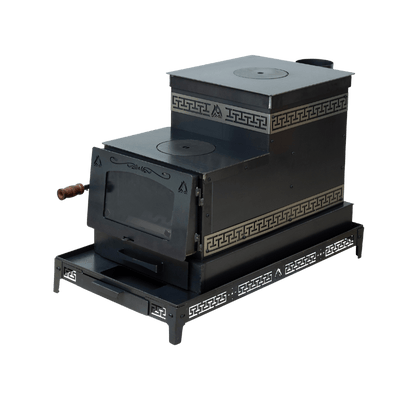
Eco1
The most widely deployed HRS system. Uses high-temperature clean combustion developed in Australia and refined in India. Burns less than 50% of the wood of a typical Chulha/Bukhari.
₹31,250
View details→
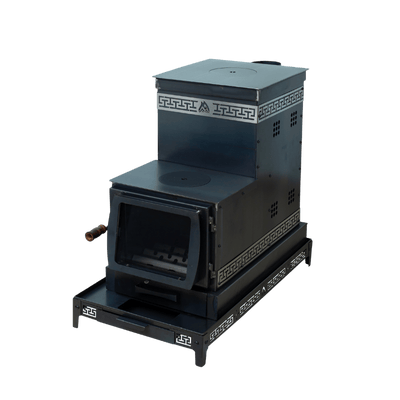
Eco2
Mid-range unit at 625mm height. Same footprint as Eco1. Recommended for large rooms and smaller guesthouse dining rooms. Uses approx. 50% less wood than a typical Bukhari.
₹50,000
View details→
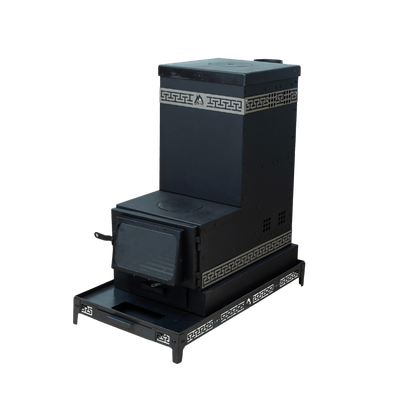
Eco3
The largest in the range at 825mm height. Recommended for large rooms, guesthouse dining rooms, small halls, and maximum-heating applications.
₹60,000
View details→
Why families choose HRS
Half the firewood
Uses less than 50% of the wood of a typical Bukhari or Chulha — saving you money every single day.
Near-zero smoke
After 10–15 minutes, the chimney runs virtually smoke-free. Cleaner air for your family, cleaner walls for your home.
Built to last decades
Heavy-weight black steel exterior. SS310 stainless steel internals. 3-year warranty on all parts. No flimsy parts.
Made for Indian homes
Designed and refined over 10+ years in real Himalayan homes. Works with locally available wood. No special fuel needed.
What our customers say
“I was spending ₹3,000 a month on wood. Now it's barely ₹1,200. The stove paid for itself in six months.”
Ramesh S.
Manali, Himachal Pradesh
“My children used to cough every morning because of the smoke. Since we got the Eco1, the smoke is almost nothing. I am so happy.”
Sunita D.
Shimla district
“It heats our entire sitting room in under 20 minutes. Even on the coldest January nights. We should have bought it years ago.”
Tenzin N.
Spiti Valley
How to order
Three steps. No complicated process.
Message us on WhatsApp
Tell us your location, the model you're interested in, and your room size. We'll confirm the right model and delivery details.
Pay securely with Razorpay
Full payment online via Razorpay. UPI, cards, net banking — all accepted. 100% secure.
We arrange delivery
Your stove ships to you. Our team supports installation guidance over WhatsApp or call.
Common questions
Which stove is right for my room?
As a general guide: EcoMini for small rooms (up to ~200 sq ft), Eco1 for medium rooms (200–400 sq ft), Eco2 for large rooms or two connected spaces, Eco3 for very large rooms, halls, or guesthouses. Message us and we'll help you choose.
What wood should I use?
Any dry hardwood works well — deodar, oak, sheesham. Avoid very resinous wood like cedar or blue pine in large quantities as it can cause excess creosote buildup. Mix resinous wood with non-resinous for best results.
Does it come with a chimney pipe?
The stove comes without pipe. We sell Window Pipe Kits and Straight Pipe Kits separately, designed for all Eco models. You can also buy locally — standard 4-inch flue pipe works.
How long does delivery take?
Delivery times vary by location. Most orders within Himachal Pradesh and Uttarakhand arrive in 3–7 business days. Please message us for your specific area.
Is installation difficult?
No. The stove sits on the floor. You attach the exhaust pipe through a window or wall hole. Most customers install it themselves in under an hour. We provide full guidance.
What is the warranty?
All Eco stoves come with a 3-year warranty on all parts. The lifespan of a well-maintained stove is measured in decades.
Ready to upgrade your heating?
Message us on WhatsApp for personalised advice, pricing, and delivery details.