
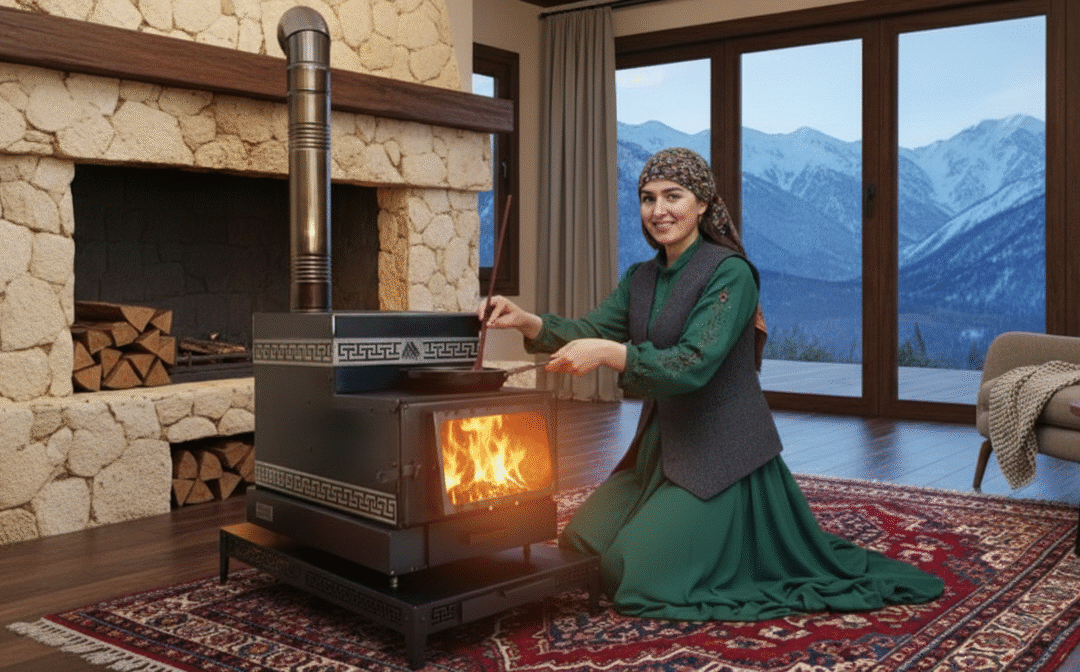
For the first time with a wood stove, Meera did not see the flame.
She heard the silence.
There was no smoke that burned her eyes, no soot covered the walls, no frantic waves, no metal plates. Just a fire, steady and focused, in a metal cylinder. Outside, fog was still.
For generations, her family cooked with traditional mud. They did, but it was time consuming; firewood, and enduring smoke. The ceilings told stories in soot. Grandma loved to joke, smoke adds to the flavor.
But Meera often thought. Did it have to be?
A Fire That Breathes Differently
A wood stove does not eliminate the fire. It understands it. Instead of letting wood smolder, and release unburned gases, the design channels air to encourage fully burned wood.
Put simply, the wood burns cleaner and hotter.
It was still on fire. But this time the fire was improved.
When Meera first looked at the fire through the opening, she could see how controlled they were. The sticks she fed into the chamber caught quickly. The fire didn’t roar wildly, it moved with purpose. The stove seemed to “breathe” – as it controlled the combustion, it pulled air in, pushed heat out, and consumed smoke before it could escape.
Meera can finally see the difference. The kitchen chimney released very low smoke that was too invisible. And now, her daughter can also sit with her and finish homework without watery eyes.
The Trail of Smoke
All over rural and semi-urban communities, kitchens have borne the hidden burden of indoor smoke with chronic cough, blackened walls and vanishing firewood piles.
Traditional open fires lose a lot of heat to the environment. A portion of the wood burns, causing smoke to form instead of producing heat. In contrast, a clean air wood heater captures the heat and uses it where it’s required from the cooking container to the room as needed.
One winter evening, when the cold went down sharply, Meera understood something more. The same stove that cooked lentils and flatbreads in the day also served to heat up the kitchen. The heat was not wasted, it was retained in the room.
Her mother waved her hand near the stove and then spoke with satisfaction. Less wood, more heat and less smoke.
Sometimes, you can tell there is a change, other times it arrives as a steady flame.
Re-thinking Production of Wooden Products
There is a unique essence surrounding the kitchen and the cooking of food over a wood fire. The smell of chapatis puffing over flame, the ritual of feeding the fire with little sticks, the crackling that is heard in the fireplace, the silence of the kitchen.
Modern gas burners might be practical, but they create an unnecessary distance from the fundamental relationship between energy and sustenance. However, going back to wood burning kitchen stoves certainly does not imply going back to rooms filled with smoke.
The thoughtfully designed wood burning kitchen stove combines modern design and functionality with traditional construction techniques. The combustion chamber is fully insulated to maintain higher temperatures to avoid wood burning emissions and maximizing efficiency.
Meera observed that her collection of large bundles of firewood was no longer necessary. Smaller sticks worked just fine. Scraps that might once have been discarded were now useful.
Wood was being consumed recklessly; it was being used wisely.
Clear Air, Clear Mornings
The kitchen is the busiest place to be in the house during the festival. The pots are simmering, and the spices are being roasted while family members are serving. However, in the kitchen, the smoke levels become unbearable, and that can leave everyone with a headache.
This time was different.
The flame was consistently bright, and conversations were able to flow without the stress of feeling the need for people to leave the kitchen for a breath of fresh air.
A clean air wood heater does more than just improve efficiency; it also provides a more pleasant experience while living near burning wood. It also provides a more comfortable experience while cooking.
When the last dish was served, Meera stepped outside and looked back at the chimney. A thin shimmer of heat rose into the sky. No thick clouds. No lingering haze.
Just warmth, quietly going about its business.
The Quiet Shift
Not every innovation needs electricity and not every solution needs complexity.
Sometimes progress is a better understanding of something ancient.
A smokeless wood stove doesn’t abandon tradition. It refines it. It respects the wood, the cook, and the air they breathe. It reduces what is wasted and enhances what is essential—heat, nourishment, gathering.
That evening, as the fire slowed to glowing embers, Meera realized the biggest change wasn’t the technology.
It was the feeling.
Cooking no longer felt like a battle against smoke. It felt like a partnership with flame.
And in that small Himalayan kitchen, where mountains stood patient outside, a humble wood burning kitchen stove had quietly rewritten a story thousands of years old—one meal at a time.
Recent Comments