
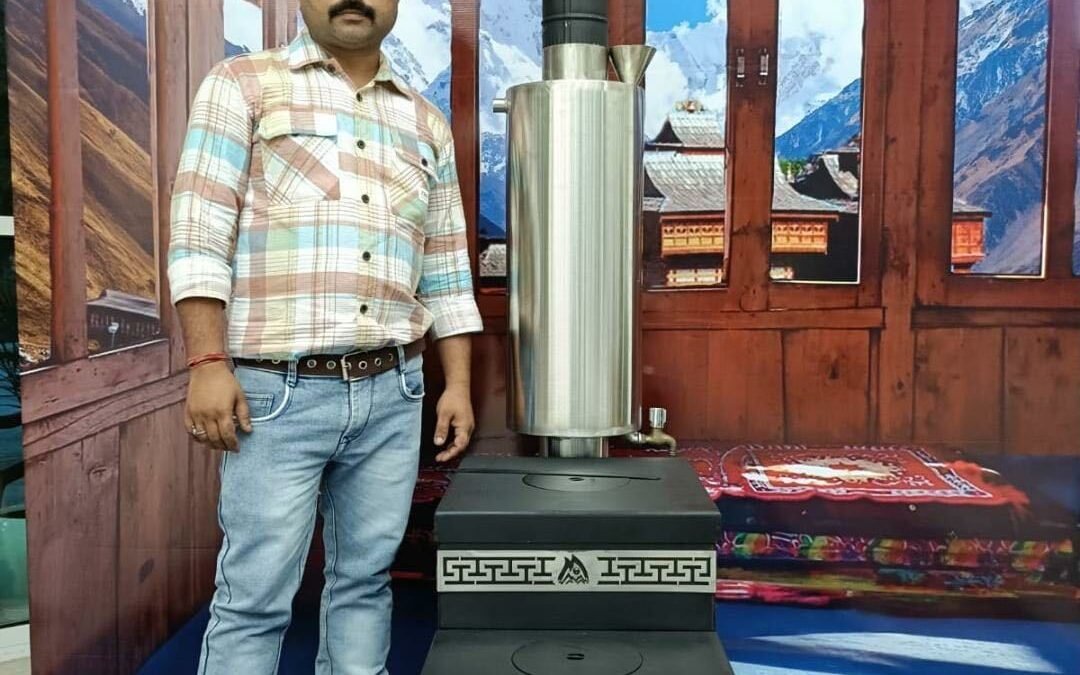
For many families in India, cooking using wood is a daily reality that they simply cannot escape.
Use of traditional chulhas is common from Uttarakhand villages, to rural Himachal, to farmhouses in Maharashtra. While wood flames provide great warmth, and food cooked over them is authentic, the smoke is a severe disadvantage.
The smokeless wood burning stove in India idea is changing lives.
The Other Side of Traditional Wood Stoves
If you’ve cooked on a traditional mud stove, you know what it is like to have burning eyes from thick smoke, and to cough constantly while in the kitchen. The walls, and cooking utensils, turn black from the smoke, and children are exposed to the smoke daily.
Many kitchens have no ventilation, and smoke builds up especially during winter when doors and windows are closed.
What becomes normal over time, is actually very dangerous.
Traditional stoves are extremely inefficient. They waste wood, and produce smoke. Families are forced to spend more time collecting firewood, and women spend long hours in the kitchen.
A smokeless wood burning stove in India offers improved comfort while positively influencing health, daily routines, and efficiency.
What Makes a Smokeless Stove Different?
A good design smokeless stove differs from a traditional chulha design. It uses improved airflow technology to do the following:
- Burn wood more completely
- Produce less visible smoke
- Use less firewood
- Cook food quickly
- Keep the kitchen cleaner
The design improves oxygen flow. This means wood will burn more efficiently therefore, creating less waste and significantly less smoke.
This also means for families living in colder hill regions, you will experience more controlled heat. Rather than feeling overwhelmed by thick smoke, you will feel constant warmth.
Why This Matters in Indian Homes
In Indian homes, cooking means more than just preparing food; it is a part of the family, culture, and a daily ritual.
Think about the difference:
Instead of walking into a smoky room everyday, the kitchen will be inviting. Instead of cleaning the walls which are black from the soot, they will be much cleaner. Instead of inefficiently burning huge quantities of wood, you will be using a smaller amount more efficiently.
For women who have to cook two or three times a day, this is a huge change.
A smokeless wood burning stove is especially good for:
- Rural households dependent on firewood
- Homes on the mountains where you cannot access gas easily
- Families living in eco friendly homes who like to cook using fire
- Off-grid living arrangements and homesteads
Saving Wood Produces Financial Savings
The process of collecting firewood requires a significant amount of time. Wood becomes a regular purchase for families in particular regions.
Smokeless stoves use their fuel supply more effectively which enables users to achieve their cooking needs with reduced wood consumption. The system produces longer burning periods with decreased log requirements. The total expense for fuel decreases through this method.
The yearly savings become evident after twelve months.
The process of making what seems like a single payment actually leads to ongoing cost reductions that happen every month. The advantages for health and safety include.
Health and Safety Benefits
Countless studies show that indoor air pollution caused by conventional cooking stoves worsens respiratory issues, particularly for women and children.
Symptoms may not present immediately, but chronic eye and lung irritations from repeated exposure.
A smokeless wood burning stove in India improves exposure significantly. Cleaner air provides:
- Better breathing
- Less respiratory irritation
- Less dense soot
- Safer cooking
When a kitchen air quality improves, the health of the entire family improves.
Tradition Without the Smoke
Many families prefer wood cooking because of taste and authenticity. Food prepared on natural flame carries a unique aroma that gas stoves simply cannot replicate.
Cooking with wood stoves has its merits. Gas stoves lack the ability to produce the signature scent that a natural flame does.
The good news is that you no longer have to forgo traditional cooking with wood to eliminate the smoke.
Modern smokeless stoves allow you to experience cooking with wood as the authentic flame experience is still present.
A Practical Upgrade for Today’s India
India is developing. The rural health and environmental awareness improves, and so does the infrastructure. Families are looking for smart and clean solutions while still retaining traditional practices.
If you:
- Prepare food every day using firewood
- Reside in an isolated or partly isolated environment
- Would like to minimize the smoke in your cooking area
- Would like to conserve your firewood usage
- Are concerned about the wellbeing of your family
Upgrading to a smokeless wood burning stove in India is an improvement, not a luxury, and it is an improvement that is worthwhile.
One Small Change, Daily Impact
Every year, there are countless hours that are spent in the kitchen. These hours can be spent in a much more comfortable environment.
Although the upgrade may seem simple, it will bring about an improvement in virtually every aspect, including health, fuel, and overall comfort.
A stove may be seen as a tool for cooking. However, it is much more than that.
It’s about protecting your family, preserving tradition, and making everyday life easier.
It is about safeguarding the family. It is about keeping the culture alive, and it is about making life all the more simple.
Sometimes, an upgrade in the kitchen can bring improvement in the house.
Recent Comments