
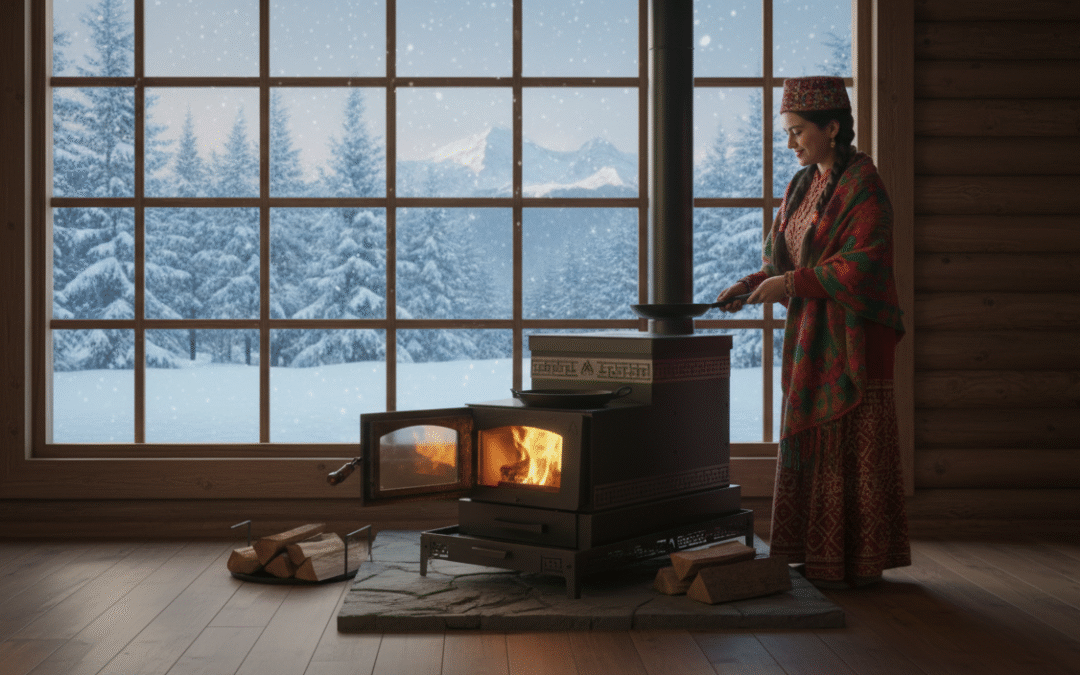
The traditional cooking practices in Himalayan regions of India depend on wood, charcoal and crop residue for their cooking needs. The conventional stoves result in excessive smoke production because they consume fuel at a high rate while providing poor heating performance. The growing health and sustainability awareness together with the need for efficient solutions has led to increasing popularity of smokeless wood burning stoves in India.
People exploring this solution are looking for a cooking method that produces fewer emissions while maintaining their use of solid fuels.
Why Traditional Wood Stoves Create Smoke
Traditional wood-burning stoves operate using fuel that their design fails to burn. The incomplete combustion results in unburned gases to escape as smoke and create indoor air pollution while wasting energy resources. The solution to this problem arises from three factors which include poor airflow design and insufficient insulation and uneven heat distribution.
The design of smokeless wood burning stoves solves this problem through their enhanced airflow systems and complete combustion systems. When wood burns more effectively smoke production decreases, heat output rises and fuel requirements diminish to gain equivalent cooking outcomes.
How Smokeless Wood Burning Stoves Work
A smokeless wood burning stove typically uses a controlled airflow system. The system brings air into specific points to help the fuel to produce fewer emissions. This method allows the combustion chamber to burn gases and particulates which normally escape as smoke through complete ignition.
Modern designs incorporate insulated chambers which enable heat retention for extended periods thus achieving better efficiency and lower fuel usage. For users in Himalayan region of India, this enables them to cook their food quickly and decrease firewood consumption for a longer term.
Growing Demand in India
People are showing more interest in smokeless wood burning stove from different regions of India due to multiple factors:
- People become more aware about indoor air pollution and how it harms their health.
- Rising fuel costs and the need to reduce firewood consumption.
- The government and NGOs work together to promote cleaner cooking methods through their outreach programs.
- People in rural areas, semi-rural areas and off-grid areas need solutions for their basic requirements.
The smokeless stove provides wood-fuel-dependent households with a solution that combines their traditional practices with modernized living standards.
What Buyers Typically Look For
People researching smokeless wood burning stoves in India focus on 3 critical factors before making any decision:
Fuel Compatibility
Buyers want stoves which can handle both local wood varieties and agricultural waste products.
Ease of Use
Daily cooking requires equipment which provides easy ignition together with straightforward cleaning and low upkeep needs.
Durability
Regular stove use requires appliances which can handle multiple environmental conditions while maintaining their performance.
Portability or Fixed Use
Users who need to cook outdoors require portable devices whereas home kitchen users demand permanent cooking systems.
People make buying decisions based on their actual needs which carry more weight than brand names or product visual appearance.
Health and Environmental Considerations
Health stands as the primary motive which drives people to adopt smokeless wood burning stoves. The reduction of smoke leads to decreased health risks because people encounter fewer harmful particulate particles which can damage their respiratory system. This situation becomes crucial for families who prepare their meals inside their homes or in partially enclosed areas.
The enhanced efficiency allows users to fulfill their cooking requirements by using less wood. The process results in decreased local wood supply requirements and enhanced fuel resource management through sustainable practices.
Is a Smokeless Stove The Right Choice For Every Household Need?
Smokeless stoves do not work for every household because their advantages have specific limitations. The three factors which affect stove selection are cooking habits and fuel supply and household size. Users of smokeless stoves will use other cooking techniques which they will select based on their seasonal meal requirements.
The assessment of everyday cooking requirements helps to establish whether purchasing a smokeless stove exists as a financially logical option for extended usage.
Making an Informed Choice
Practicality determines the choice of smokeless wood burning stove India for people who need to find this product. The assessment of your stove requires three key areas which include daily usage patterns and fuel availability and your personal cooking preferences.
Smokeless wood burning stoves provide a modern approach to cooking which improves health and energy efficiency while maintaining traditional wood cooking methods.
Recent Comments